

Career Development3 min read
Why Students Should Build a Portfolio, Not Just a Resume

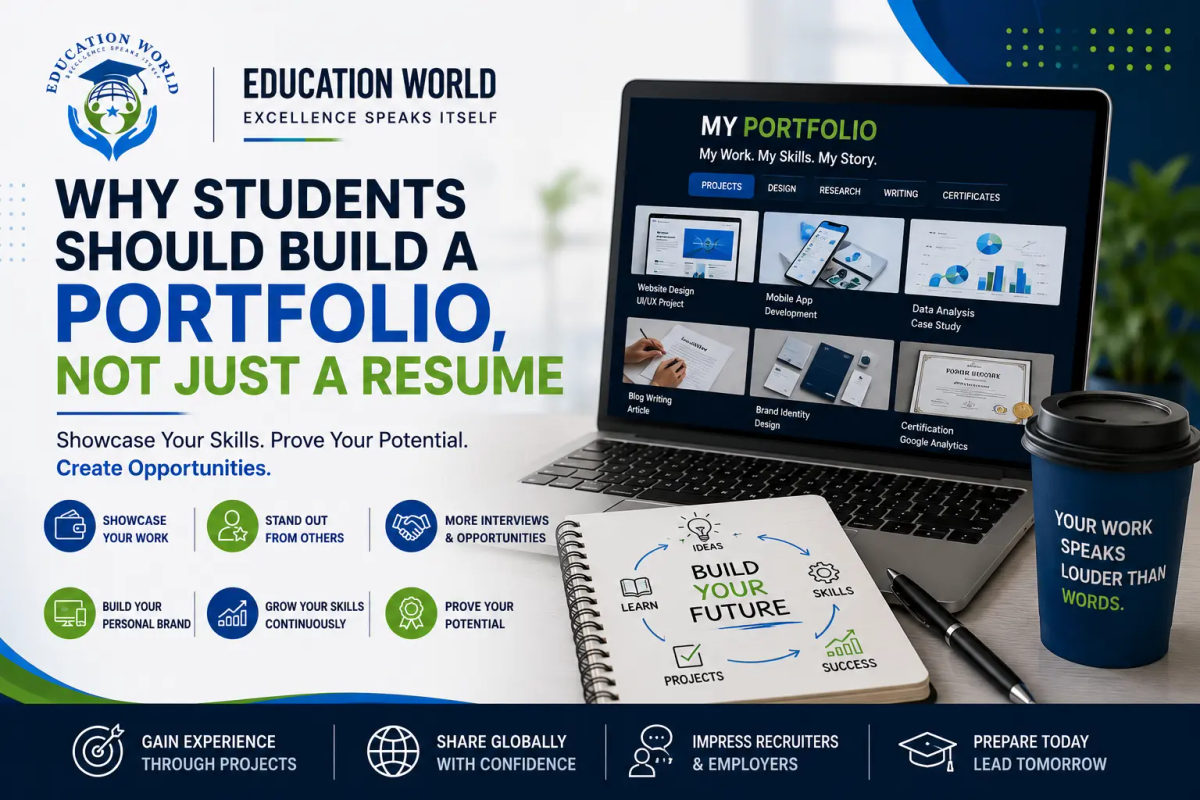
For decades, students were told that a strong resume was the key to getting noticed by employers.
While resumes remain important, the modern job market is changing. Employers increasingly want evidence of skills, projects, achievements, and real-world experience—not just a list of qualifications.
This is where portfolios become powerful.
A portfolio allows students to showcase their work, demonstrate their abilities, and prove they can apply what they have learned.
In many industries, a strong portfolio can be the difference between being overlooked and being selected for an opportunity.
A portfolio is a collection of work that demonstrates your skills, achievements, and experiences.
Unlike a resume, which summarizes information, a portfolio provides proof.
It can include:
Academic projects
Research work
Writing samples
Presentations
Designs
Case studies
Certifications
Volunteer work
Personal projects
Internship experiences
Think of it as a showcase of what you can actually do.
A resume typically answers:
A portfolio answers:
In competitive job markets, evidence often speaks louder than claims.
A portfolio provides evidence.
Employers receive hundreds of applications for many positions.
Most resumes look similar.
A portfolio helps candidates:
Stand out
Demonstrate expertise
Build credibility
Showcase achievements
Highlight practical skills
Instead of simply saying you have skills, you can show them.
This is one of the biggest misconceptions.
Even students with limited professional experience can build impressive portfolios.
Potential portfolio content includes:
University assignments
Research projects
Case studies
Student competitions
Volunteer initiatives
Club leadership activities
Freelance work
Personal learning projects
Every meaningful project can contribute to your portfolio.
Recruiters often appreciate seeing examples of work.
Employers gain confidence when they can evaluate your abilities directly.
A portfolio helps establish your professional identity.
Reviewing your achievements can reinforce your skills and progress.
Modern portfolios are often online.
Examples include:
Personal websites
Portfolio platforms
Professional networking profiles
Project repositories
Digital portfolios are easy to share and update.
A few strong projects are usually more valuable than dozens of weak examples.
Visitors should quickly understand your work and achievements.
A clean, professional design improves credibility.
Explain:
What the project involved
Your role
Challenges faced
Results achieved
Context helps readers understand the value of your work.
Software projects
Websites
Mobile applications
Coding challenges
Marketing campaigns
Business plans
Market research projects
Graphic design work
Branding projects
Creative campaigns
Lesson plans
Educational resources
Teaching projects
Research reports
Laboratory projects
Academic presentations
Every field offers opportunities to build a meaningful portfolio.
The best portfolios are built gradually over time.
Focus on your strongest work.
Good work deserves professional presentation.
A portfolio should evolve as your skills grow.
Step 1:
Collect your best academic and personal projects.
Step 2:
Choose a platform to showcase them.
Step 3:
Write short explanations for each project.
Step 4:
Organize your work professionally.
Step 5:
Update regularly as you gain experience.
Small steps today can create significant advantages later.
The answer is simple:
Almost every student.
Whether you are interested in:
Technology
Business
Education
Design
Engineering
Healthcare
Media
Research
a portfolio can help demonstrate your abilities and achievements.
The future job market increasingly rewards proof of skills rather than claims of skills.
Degrees remain important.
Resumes remain important.
But portfolios provide something unique: evidence.
Students who begin documenting their work early often gain a competitive advantage when applying for scholarships, internships, jobs, and professional opportunities.
A resume tells your story.
A portfolio shows your story.
In an increasingly competitive world, students need more than qualifications alone. They need ways to demonstrate their abilities, achievements, and potential.
Building a portfolio early can strengthen your confidence, improve your opportunities, and help employers understand the value you can bring.
Don't wait until graduation.
Start documenting your work today, and your future self will thank you for it.
Academic intelligence can help you get opportunities, but emotional intelligence often determines how far you go. Discover why employers increasingly value emotional intelligence in today's workplace.

Choosing the right degree can significantly impact your future career opportunities. Explore the most valuable degrees for the evolving job market and discover which fields are expected to remain in high demand.
A strong LinkedIn profile can help students attract recruiters, discover internships, build professional networks, and unlock career opportunities. Learn how to optimize your profile and stand out professionally.


Comments
Ask a question or share helpful information. Comments are reviewed by our team before they appear.
No comments yet - be the first to ask a question about this post.