

Student Success3 min read
How to Build Effective Study Habits for Long-Term Academic Success


Many students believe that academic success depends primarily on intelligence. While natural ability can be helpful, research consistently shows that effective study habits often play a much bigger role in long-term success.
The difference between struggling students and high-performing students is frequently not talent but consistency. Strong study habits help learners retain information, stay organized, reduce stress, and perform better in exams.
The good news is that study habits are skills that anyone can develop with practice and discipline.
Good study habits help students:
Learn more efficiently
Improve memory retention
Reduce procrastination
Increase productivity
Lower academic stress
Achieve better results
Students who build effective routines often spend less time studying while achieving stronger outcomes.
One of the most powerful habits is studying consistently rather than only before exams.
Instead of cramming information at the last minute:
Set regular study hours
Follow a weekly routine
Review material frequently
Break large tasks into manageable sessions
Consistency strengthens understanding and long-term memory.
Your environment influences your concentration.
A productive study space should be:
Quiet
Organized
Comfortable
Well-lit
Free from distractions
Even small improvements to your workspace can significantly increase focus.
Many students sit down to study without a specific objective.
Before starting, ask yourself:
What topic will I cover?
What outcome do I want?
How much time will I spend?
Clear goals make study sessions more productive and measurable.
Reading notes repeatedly is often ineffective.
Instead, use active learning strategies such as:
Self-testing
Practice questions
Flashcards
Teaching concepts to others
Summarizing information in your own words
Active engagement improves understanding and retention.
Memorization can be useful, but understanding concepts is more valuable.
Students should aim to:
Understand why something works
Connect ideas together
Apply knowledge to new situations
This approach supports deeper learning and better exam performance.
Studying for hours without rest often reduces efficiency.
Short breaks can:
Improve concentration
Prevent burnout
Increase productivity
A common method is studying for focused periods followed by brief breaks.
The goal is quality, not simply quantity.
Poor time management is one of the biggest obstacles to academic success.
Students should:
Prioritize important tasks
Plan assignments early
Avoid last-minute work
Use calendars and reminders
Managing time effectively reduces stress and improves performance.
Modern students face constant distractions from:
Social media
Messaging apps
Notifications
Streaming platforms
During study sessions:
Silence unnecessary notifications
Keep phones away when possible
Use focus tools if needed
Protecting your attention is essential.
Many students only revisit information before exams.
Regular review helps:
Strengthen memory
Identify weak areas
Improve confidence
Short review sessions throughout the semester are often more effective than marathon revision sessions.
Mistakes are valuable learning opportunities.
After tests or assignments:
Review incorrect answers
Understand why errors occurred
Adjust study methods
Students who learn from mistakes often improve faster.
Academic success is closely connected to physical and mental well-being.
Students should prioritize:
Adequate sleep
Healthy nutrition
Physical activity
Stress management
A healthy mind and body support better learning.
One of the most common misconceptions among students is that successful learners study constantly.
In reality, successful students usually focus on consistency, planning, and effective methods rather than endless hours of work.
The most productive study habits are sustainable. A routine that can be maintained for months or years is far more valuable than a short burst of intense effort.
This often increases stress and reduces retention.
Trying to study while constantly switching tasks lowers efficiency.
Students often spend too much time on topics they already understand.
A lack of structure can lead to wasted time and inconsistent results.
This guide is useful for:
High school students
College students
University students
Competitive exam candidates
Lifelong learners
Effective study habits benefit learners at every stage of education.
Academic success is rarely the result of intelligence alone. More often, it comes from consistent effort, effective study methods, and strong daily habits.
By creating a study schedule, reducing distractions, using active learning techniques, and maintaining a healthy routine, students can dramatically improve both their academic performance and overall learning experience.
Small improvements practiced consistently can produce remarkable results over time.
In a world filled with information, critical thinking helps students analyze facts, solve problems, make better decisions, and succeed academically and professionally. Learn why this skill matters more than ever.

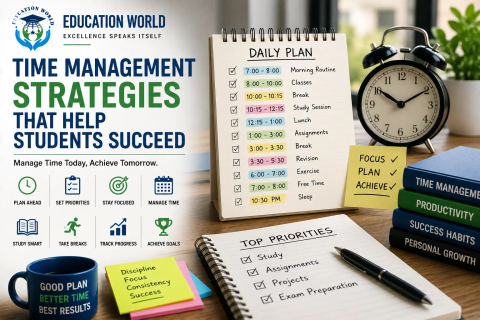
Effective time management helps students reduce stress, improve productivity, and achieve academic goals. Learn practical strategies to manage your schedule, stay organized, and make the most of every day.
Studying for hours does not always lead to better results. Discover evidence-based study techniques that improve understanding, retention, concentration, and exam performance while helping students learn more efficiently and effectively.


Comments
Ask a question or share helpful information. Comments are reviewed by our team before they appear.
No comments yet - be the first to ask a question about this post.